
The complete guide
Choosing a 10 Litre Water Carry Can for Camping and Preparedness
Start with the water you need to carry
Water is easy to take for granted until the tap is a walk away. At a campsite, or while planning for an interruption to your usual supply, having a separate container can help you organise where water will be kept and how you will move it.
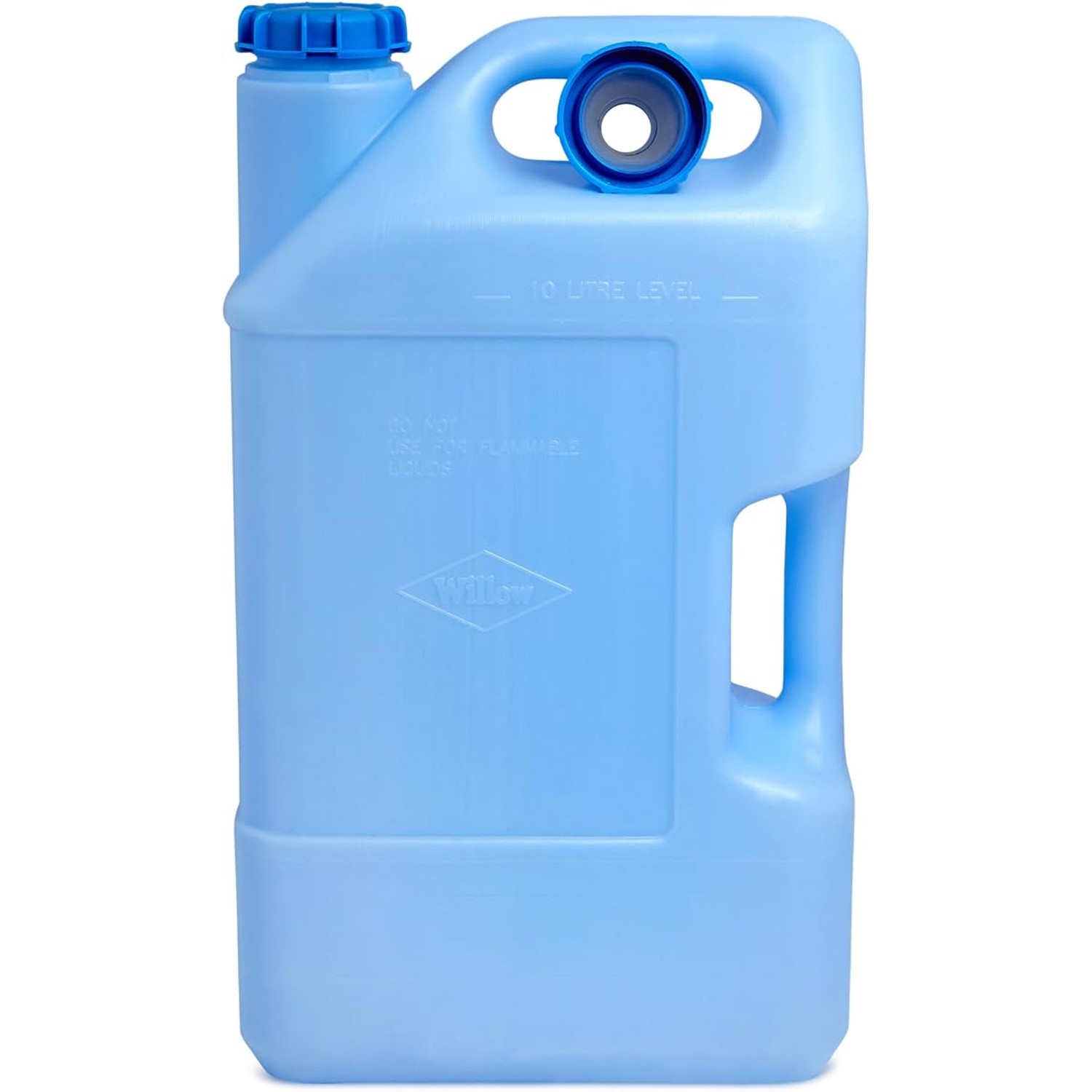
The Willow 10L Water Carry Can with Pourer is a blue, Australian-made container supplied empty. It holds 10 litres and includes a pourer. Those are useful starting facts, but choosing a water can also means thinking about the water source, your storage space and how much you can comfortably carry.
A container is only part of the plan. It does not provide the water, filter it or guarantee how long that water will remain suitable. Keeping those limits clear helps you choose with fewer assumptions.
What this water carry can offers
This Willow 10 litre water can is identified as model 310100-004. Its stated capacity gives you a fixed amount to work with when comparing containers or planning refills.
The included pourer provides a way to transfer water out of the can. That matters when the place you collect water is different from the place you use it. Think about both ends of the task, including the container or vessel receiving the water.
Some important specifications are not supplied in this record. Material, empty weight and outside dimensions are unknown. There is also no verified BPA claim. If any of those details are essential to your purchase, confirm them before deciding.
How a water can with pourer works
The basic role of a water can with pourer is to hold water and let you transfer it elsewhere. Use the product according to its supplied instructions, including any directions for fitting or using the pourer.
Before filling, consider where you will empty it. A receiving opening may be easy to reach on a bench but awkward near the ground. Leave yourself enough room to handle the can without stretching or balancing it on an unsuitable surface.
The listing does not state that a tap is included. It also does not provide a leakproof claim. Avoid building your setup around features that have not been confirmed, even if you have seen them on other water containers.
Decide whether 10 litres suits your plans
A 10L water container gives you a known capacity, not a promise that it will cover a whole outing. The amount you need depends on your group, the length of the trip and what you intend to do with the water.
Start by listing those uses. Then consider whether you can refill along the way and whether the refill source is appropriate. A short stay near facilities is a different situation from a trip with no dependable refill access.
Allow for the practical work of moving the water too. You do not have to fill a can to its full capacity every time. A smaller fill may be more manageable, although it also means carrying less water between refills.
Think through your camping routine
A campsite water container is most useful when it fits the way you camp. Picture where it will sit, where you will collect water and how often you will need to move it.
If you expect to carry water from a shared tap, consider the route back to your campsite. Uneven ground, steps and a long walk can all affect what feels manageable. Capacity alone does not tell you how comfortable a container will be to handle.
Also think about access at camp. A can packed behind other equipment may be inconvenient when you need it. Plan a suitable place for it without assuming its dimensions or transport performance. Those details need checking rather than guesswork.
Keep storage separate from treatment
This can has no filtration. Filling it from a water source does not change the quality of that water or make an unsuitable source safe to drink.
That distinction is important when comparing portable water storage products. A container and a filter serve different roles. If your plan requires water treatment, this can does not supply that function.
Drinking-water suitability is not confirmed in this record either. Check the manufacturer's guidance before using it for drinking-water storage. Do not treat the product name, blue colour or Australian manufacture as proof of a material or safety claim that has not been stated.
The same care applies to storage time. There is no water-life guarantee, so this listing cannot tell you how long stored water will remain suitable.
Use it as one part of preparedness planning
An emergency water container can give you somewhere to put water, but an empty can is not a ready emergency supply. You still need to plan the source, intended use and care of the water.
Think about where the container will be kept and who may need to move it. A plan that works for one person may be difficult for another, especially when lifting or carrying is involved.
Avoid choosing on capacity alone. Emergency water storage also calls for clear information about suitability and storage practices. Where the product record does not answer a key question, seek that information before relying on the can for a specific role.
Check fit before arranging your storage space
The can's external measurements are not specified here. That means you cannot confirm whether it will fit under a shelf, inside a cupboard or within a particular camping storage layout from this record alone.
Measure the space you have available, then obtain the product measurements. Allow room for handling and for using the pourer, not just room for the body of the can.
Empty weight is also unspecified. If weight is a deciding factor, ask for it before buying. Photos and capacity descriptions are not reliable substitutes for measurements, particularly when you are working with limited space or lifting limits.
Look at what is confirmed, not what seems likely
The confirmed details are straightforward. This is a blue Willow water storage can with a 10 litre capacity and a pourer. It is made in Australia and supplied without water.
Other details should remain open questions until verified. There is no stated material, temperature limit or dishwasher approval in this record. Compatibility with liquids other than water is not supplied.
This approach makes comparison easier. Instead of assuming two similar-looking cans have the same features, compare the facts that matter to you. If another product gives a dimension or material declaration, look for the same confirmed information here before treating them as equivalent choices.
Plan for cleaning and storage
Follow the cleaning and storage instructions supplied with the can. They should guide your routine rather than a method borrowed from a different container.
Before use, check the can and pourer for dirt or visible damage. Keep the pourer clean during handling, since it is part of the path the water takes when you transfer it.
Do not assume that hot water, a dishwasher or a particular cleaning chemical is suitable. None of those methods is confirmed in this record. If the instructions do not answer your question, seek guidance before trying a cleaning method that may be inappropriate.
Care is part of choosing a container, not just something to consider after purchase. Make sure the required routine suits how you plan to use it.
Buying for someone else
A camping water carry can may be a useful gift for someone building a camping setup. It is worth checking what they already own and whether they need another water container.
Ask about their available space and the kind of outings they take. A person who carries gear on foot may have different priorities from someone organising a fixed campsite.
The same questions matter when buying for a shared household. Who will fill it? Who will move it? Where will it be stored? Answering those questions can be more helpful than picking a capacity without considering daily use.
If your plans change
Before purchasing, read the store returns policy. Voluntary 14-day change-of-mind returns are subject to conditions, so check those conditions rather than assuming every return will qualify.
Australian Consumer Law rights are unaffected. If the can is not right for your needs, or you have a product concern, contact the store and refer to the relevant policy for the next steps.
Confirming missing specifications before ordering can help avoid an unsuitable purchase. That is especially worthwhile when a precise fit, material requirement or intended water use is central to your decision.
The short version
Choose the Willow 10L Water Carry Can with Pourer if its stated capacity and included pourer match your plans, after checking any missing details you need. It is blue, made in Australia and supplied empty.
Treat it as a water container, not a filter or a guarantee of stored water quality. Plan your supply, confirm suitability for your intended use, and follow the supplied cleaning and storage instructions.