
The complete guide
Choosing a 20 Litre Dry Bag for Camping
A pack can become hard to manage when spare clothes and other camping gear are loose inside it. You reach for one item and disturb everything around it. A dedicated storage bag gives part of your kit a clear home and makes it easier to keep that group together.
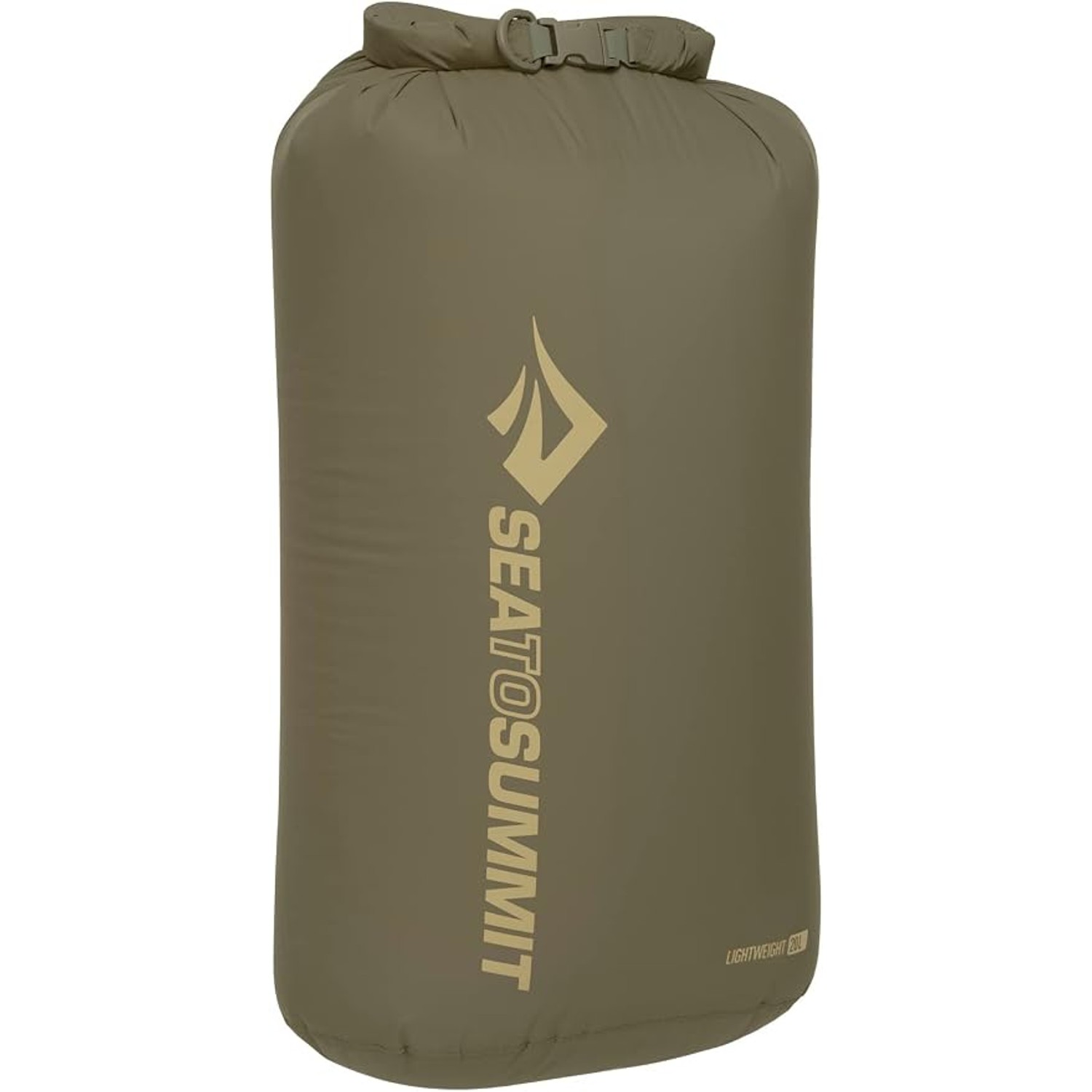
The Sea to Summit Lightweight 20L Dry Bag offers 20 litres of storage in lightweight recycled 70D nylon. It has taped seams, an oval base and a roll-top closure with a buckle. Those are useful details to compare, but choosing well also means knowing its limits. This is not a dive bag or flotation device, and you should not assume submersion protection.
Start with the gear you want to pack
Before choosing a camping packing bag, set out the items you want it to hold. Think about them as a group rather than checking each item on its own. A few bulky pieces can take more space than expected, even when none seems especially large.
A 20 litre capacity gives you a volume to work with, not a promise that a particular kit will fit. Clothing varies in bulk. So do sleeping bags and other soft items. The way you fold or pack them changes the space they need.
Also consider when you will need access. Gear used together often makes sense stored together. Items you reach for at different times may be easier to manage separately. The aim is a packing system that helps you find what you need without unpacking the whole load.
Understand what the closure needs
A roll top storage bag depends on correct closing. With this model, the opening rolls down and is secured with a buckle. Follow the manufacturer's instructions for the method rather than choosing a number of rolls by guesswork.
Allowing room for that closure is part of choosing the right capacity. Filling a bag to its open edge leaves no useful space to form the rolled top. If your planned load reaches that point, reduce the contents or consider a different capacity.
Take a moment to check the opening before closing it. Packed items should not obstruct the fold. When you reopen the bag during a trip, give the next closure the same attention as the first. A rushed closure is not something to rely on.
Look at the fabric without guessing its performance
The listed fabric is lightweight recycled 70D nylon. That tells you the material and fabric designation. It does not provide an exact bag weight or prove how it will perform under every kind of use.
If you track every gram in your pack, the missing weight matters. Check it before making a precise comparison with another lightweight dry bag. The word lightweight is useful as a description, but it is not a substitute for a measured figure.
The recycled description applies to the nylon fabric. It does not establish the recycled content of every component. There is no stated recycled percentage for the buckle or other parts, so avoid treating the whole product as having a confirmed recycled content.
Know what taped seams do and do not tell you
Taped seams are a confirmed part of this bag's construction. They are worth noting when comparing it with other camping dry storage options. However, the supplied details do not include a water-resistance rating or a test standard.
That gap matters when the consequences of wet contents would be serious. A product described as a dry bag should still be matched to its stated use limits. Do not turn the name into a promise of protection under water.
This model is not a dive bag. It is also not a flotation device, regardless of whether air remains inside after closing. Personal safety equipment serves a different purpose, and this storage bag should never take its place.
Decide whether 20 litres is the right size
Capacity is often the first filter when choosing a dry bag for clothing or general camping organisation. Too small, and the closure becomes difficult. Too large for your chosen contents, and you may prefer a different way to divide your kit.
Start by packing your intended items into a roughly comparable volume. This is only a planning step, not a precise fit test. Soft gear can change shape, while the rolled closure needs its own space.
External dimensions are not supplied in this record. If you need the bag to fit a narrow compartment or a fixed storage space, confirm those measurements before deciding. Two bags with the same capacity can have different shapes, so litres alone cannot settle every fit question.
Consider the oval base and white interior
An oval base is one of this model's confirmed features. Shape can matter when arranging several items within a larger pack, but there are no base measurements here. Avoid assuming that it will fit a particular corner or compartment.
The white interior offers a more direct everyday benefit. It gives a light background behind your gear, which can help you see what is inside. That is useful when smaller items would otherwise be hard to pick out.
Good organisation still helps. Put frequently needed items where you can reach them without pulling out the whole load. A white interior dry bag can improve visibility, but it cannot solve a packing order that hides the item you need at the bottom.
Match the bag to your camping routine
This bag is worth considering if you want a 20 litre container for grouped camping gear and prefer a roll-top design. The Burnt Olive colour, recycled nylon fabric and buckle closure are clear points to compare with your current storage.
Think about how often you will open it. A bag holding spare clothing may be accessed less often than one carrying items used throughout the day. Repeated access is manageable, but each opening means closing it correctly again.
For valuable or moisture-sensitive contents, be cautious. No electronics-specific protection is stated, and submersion protection should not be assumed. Choose protection based on what the contents need, not simply on what will fit inside the bag.
Compare only the facts you can confirm
Shopping for a recycled nylon dry bag gets easier when you separate known details from open questions. Here, the capacity, fabric, colour, closure, taped seams, interior colour and base shape are supplied. Exact weight and dimensions are not.
Other details are also unconfirmed. There is no stated carry strap, compression system or water-resistance rating in this record. Do not count those features as included just because they appear on another bag with a similar name.
If one missing detail would change your decision, confirm it first. That is especially important for tightly packed luggage or weight-limited kit. A clear unanswered question is more useful than an assumption you only discover was wrong when packing for a trip.
Make care part of the packing routine
Follow the manufacturer's instructions for cleaning and care. As a general habit, remove loose dirt gently and avoid abrasive cleaning. Do not assume machine washing is suitable when that method has not been confirmed.
Let the bag dry fully before storing it. Putting gear away is also a good time to look over the fabric, seam tape and buckle. Damage noticed at home is easier to deal with than damage first noticed when you need the bag.
Keep sharp objects from pressing directly against the fabric during storage or use. Avoid forcing bulky contents into place. Careful packing and routine checks are sensible habits, but they do not create a guarantee of protection or replace the manufacturer's guidance.
Buying one as a gift
A dry bag can be a practical gift for someone who already has a camping routine. The useful question is whether this particular capacity fills a gap in their kit. Someone who prefers several small bags may pack differently from someone who groups gear in one larger bag.
If possible, ask about their preferred size and closure style. Colour may matter too, especially if they identify different parts of their kit by sight. This version is Burnt Olive with a white interior.
For a change of mind, refer to the store returns policy. Voluntary 14-day change-of-mind returns are subject to conditions. Australian Consumer Law rights are unaffected.
The short version
Choose this 20 litre dry bag if its capacity and roll-top format suit the gear you want to organise. Its confirmed features include lightweight recycled 70D nylon, taped seams, a buckle closure, an oval base and a white interior.
Leave room to close it correctly, and confirm any missing measurements that matter to your pack. Most importantly, respect its use limits. It is camping dry storage, not a dive bag or flotation device, and submersion protection should not be assumed.