
The complete guide
Choosing a Personal Water Filter Straw With Clear Limits
Start with the water problem, not the filter
Choosing a water filter can seem simple until you look at what might be in the water. Bacteria, parasites, viruses, salt and chemical contamination are different problems. A product described as a personal water filter should not be assumed to deal with all of them.
The LifeStraw Peak Personal Water Filter Straw has a defined role. The manufacturer states that it filters bacteria and parasites. It does not remove viruses, it is not a desalination device, and it is not suitable for chemically contaminated floodwater.
Those limits are central to the buying decision. Start by asking what your water plan needs to address. Then compare those needs with what this filter is stated to do. That is more useful than choosing on the strength of an outdoor or emergency label alone.
What this personal filter includes
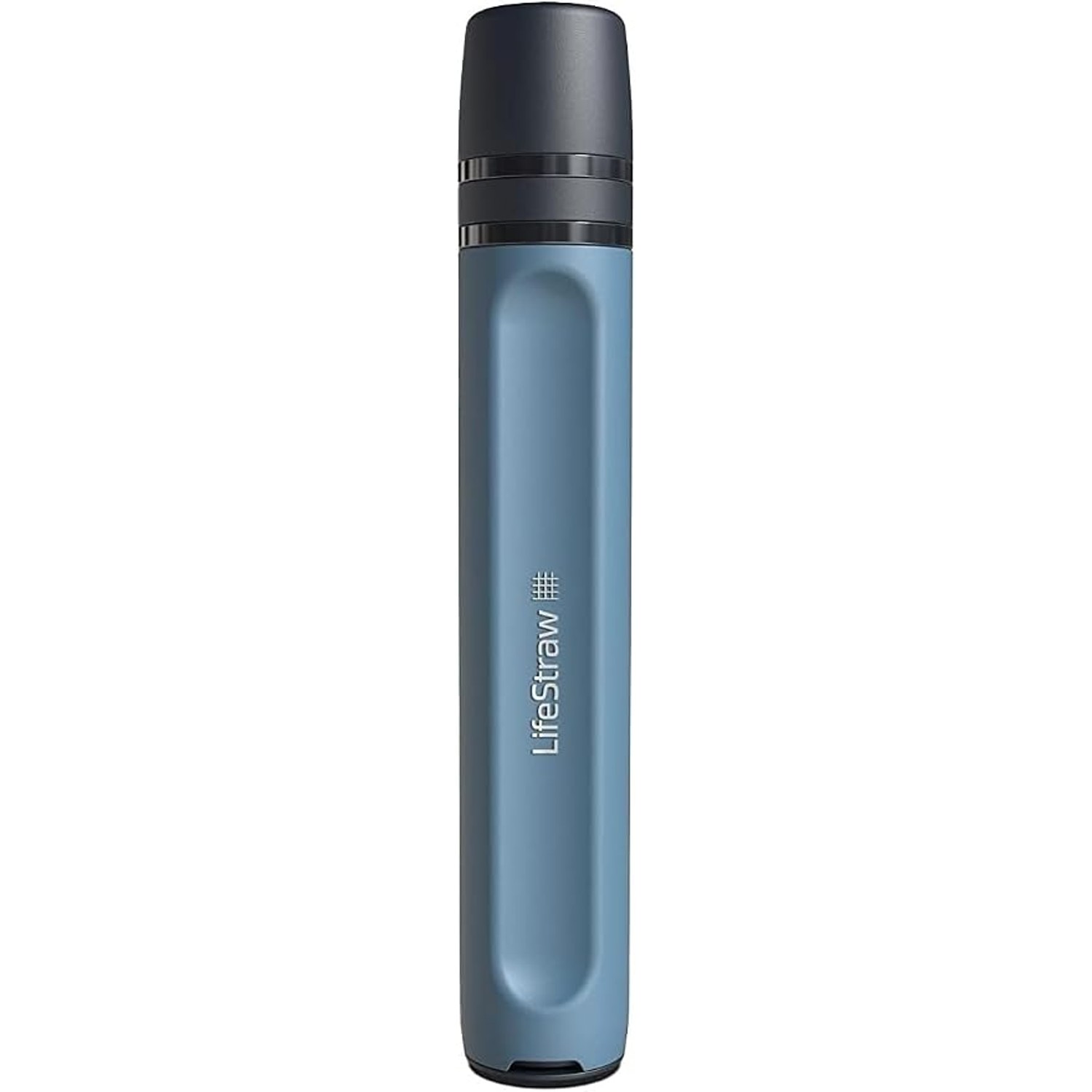
This listing is for the LifeStraw Peak Personal Water Filter Straw in the Mountain Blue variant. The package includes the straw and a user manual. No additional accessories are specified in this record.
The straw format identifies it as a personal filter. It does not, by itself, tell you the product's dimensions, weight, output or compatibility with other equipment. Those details are not provided here.
If you are buying for a particular bag, storage space or equipment setup, confirm the missing specifications first. A photograph or product name is not a reliable substitute for measurements. The same applies if you have a strict weight allowance or need a stated volume of treated water.
Understand its stated filtration scope
The key filtration claim is that the product filters bacteria and parasites. That is the manufacturer's stated scope, not a claim that every water source becomes safe after use.
This record does not provide numerical removal rates, test standards or certification details. It also does not describe the internal filtering material. Avoid filling those gaps with specifications from another LifeStraw product or a similar-looking straw water filter.
When comparing products, keep each claim attached to the exact model being considered. Two products can share a brand or format without having the same instructions or treatment scope.
For this model, the useful starting point is clear. It targets bacteria and parasites, while several other water problems remain outside its stated role.
Why virus removal is a separate question
This filter does not remove viruses. If your water treatment plan requires virus removal, this product alone does not meet that requirement.
That limit should be considered before purchase, not treated as a minor detail to check later. A general phrase such as “emergency water filtration” cannot replace a specific treatment claim.
This guide does not provide a treatment sequence for water with a virus risk. Seek appropriate guidance for the source and situation rather than assuming that an extra step chosen without advice will make the water suitable.
The goal is a water plan that matches the actual risk. Owning a filter is only one part of that decision.
Salt and floodwater are outside its role
The LifeStraw Peak Personal Water Filter Straw is not a desalination device. Do not choose it to turn seawater into drinking water. Filtering bacteria and parasites is not the same as removing dissolved salt.
Chemically contaminated floodwater is also outside its stated suitability. This is especially important when thinking about emergency use. The word “emergency” describes a situation, not a promise that a product can treat every contaminant found in that situation.
Do not assume that water is suitable simply because it has passed through the straw. There is no blanket safe-water guarantee.
If a source may involve contamination outside the filter's stated scope, do not rely on this product to solve that problem.
Who should consider this filter?
This product may be worth considering for someone building an individual water treatment plan who needs the stated bacteria and parasite filtration function. It is not a universal answer for every trip, household or emergency.
For outdoor planning, begin with the likely water sources and the guidance relevant to them. Then decide whether this personal filter's scope fits. The setting alone does not establish suitability.
For an emergency kit, use the same approach. Ask what kind of water problem the kit is meant to address. If the plan depends on desalination, virus removal or treatment of chemically contaminated floodwater, this filter does not meet that need.
A good match comes from clear requirements, not from trying to make one item cover every possible event.
How to compare personal water filters
The best personal water filter for your needs is the one whose confirmed function matches your requirements. Start with contaminant coverage, then check the practical details that could affect your choice.
For this listing, weight and dimensions are not specified. Neither are filtration capacity, service life or flow rate. Materials and country of origin are also not specified.
These gaps do not establish whether the product will or will not suit you. They identify questions to resolve before buying. If you need a particular capacity or a filter that fits a fixed space, get those facts confirmed.
Compare like-for-like information. A precise specification from one listing should not be weighed against an assumption about another. Keep unknown details marked as unknown until you have reliable information.
Check the fit with your existing equipment
A personal filter straw should not be assumed to connect to bottles, reservoirs or hydration packs. This record does not state compatibility with any of those items.
If a connection is essential to your plan, confirm it before purchase. Do not rely on the appearance of an opening or on a connection used by a different model.
The same care applies to accessories. Only the straw and user manual are listed as included. Build your expectations around those items rather than assuming that a pouch, spare part or attachment will be supplied.
This simple check can prevent a mismatch between the filter you buy and the way you intended to use it.
Read the manual before you need the filter
The included user manual is part of the product, not an optional extra. Read it before first use so you understand the manufacturer's operating instructions.
This record does not give preparation steps, a cleaning sequence or replacement criteria. It would be unwise to invent those details or borrow them from another model.
Check the instructions while you have time to ask questions. If a step is unclear, seek clarification rather than guessing. Familiarity with a previous filter does not confirm that the same method applies here.
Keep the manual available for later reference. Use and maintenance questions can arise after the first outing as well as before it.
Make maintenance part of the plan
Filter maintenance matters to this product's use. Follow the manufacturer's instructions for cleaning, storage and any checks required between uses.
Avoid improvised cleaning methods and unapproved cleaning agents. A method that seems convenient is not necessarily appropriate for the filter.
No service life or replacement interval is specified in this record. Do not assume that the product remains suitable indefinitely, or that a particular amount of use is acceptable without checking the guidance.
If the filter is damaged or its condition is uncertain, do not assume it still performs as intended. Consult the manufacturer's instructions before further use. The absence of an obvious problem is not a substitute for following the required care.
Source selection still matters
Water source selection remains important even when you have a bacteria and parasite filter. The product's stated limits do not change according to where it is used.
Avoid treating clear appearance, an outdoor setting or another person's experience as proof that a source is suitable. Instead, consider the source risks and relevant advice.
This guide cannot confirm the safety of a particular stream, lake or emergency water supply. It also cannot provide a blanket rule that covers every location.
The practical buying lesson is to keep the filter and the source in the same conversation. A suitable product choice depends on both. If the source requires treatment outside this filter's scope, reconsider the plan rather than stretching the product claim.
Buying it as a gift
A personal filter straw may be a thoughtful gift for someone who has asked for this type of equipment. Check that it fits the recipient's intended water treatment plan rather than choosing it only because they enjoy outdoor activities.
Pass on the included manual and make sure the limits are understood. The recipient should know that this model does not remove viruses or salt and is not suitable for chemically contaminated floodwater.
If the product turns out not to suit, refer to the store returns policy. Voluntary 14-day change-of-mind returns are subject to conditions. Australian Consumer Law rights are unaffected.
The short version
The LifeStraw Peak Personal Water Filter Straw comes with a user manual, and the listed variant is Mountain Blue. The manufacturer states that it filters bacteria and parasites.
It does not remove viruses, desalinate water or suit chemically contaminated floodwater. There is no blanket safe-water guarantee, and source selection and maintenance matter.
Choose it only when that defined role fits your needs. Confirm any essential missing specifications, read the manual and keep the product's limits at the centre of your water plan.