
The complete guide
Choosing a Rechargeable Head Torch for Everyday Tasks
A handheld torch is useful until you need both hands. Opening a cupboard, sorting gear or working on a small task can become awkward when one hand is busy holding the light. Putting the torch down may help, but then it can point in the wrong direction.
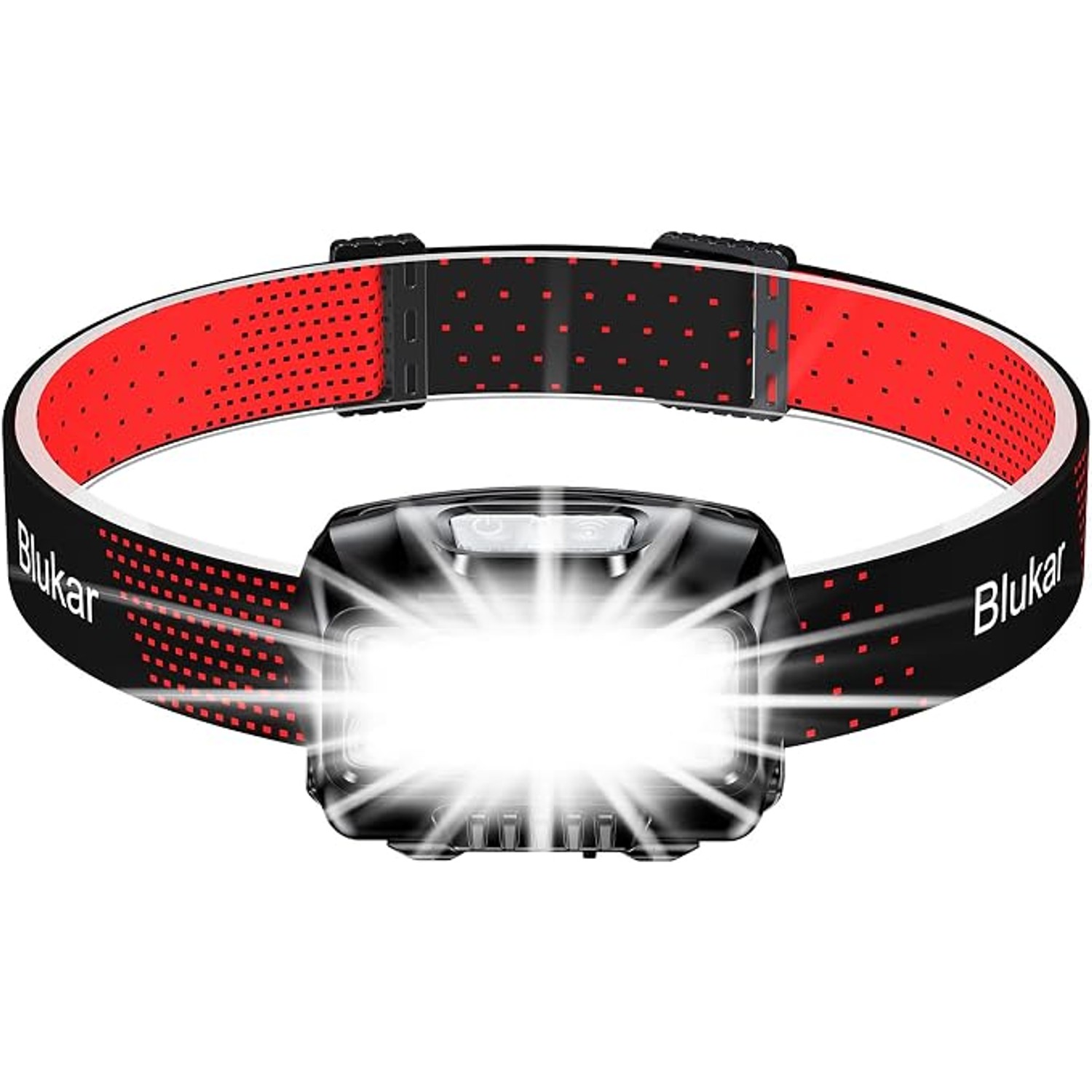
A head torch gives you another way to work. The light sits on your head, leaving your hands available. The Blukar Rechargeable Head Torch adds several lighting choices, dimming and an adjustable lamp base to that basic idea.
Choosing well still means looking beyond the word “rechargeable”. Fit, controls and the information that is missing all matter. This guide explains what this model offers and what to check before making it part of your kit.
Start with the task, not the feature list
Think about where you most often need extra light. Is it inside a dark cupboard? At a table where your hands cast shadows? Around camping gear after daylight fades? The task should shape your choice.
A head torch for household tasks can make sense when a handheld light keeps getting in the way. You can keep your hands on the object you are handling, rather than finding somewhere to balance a torch.
That does not mean one lamp will suit every setting. Outdoor use raises questions about weather resistance and runtime. Close work brings fit and light adjustment into focus. This model has useful adjustment options, but several performance details are not specified.
Before comparing products, decide which facts you must know. That makes it easier to tell the difference between a useful feature and a missing detail that could affect your plans.
Understand the lighting choices
This Blukar model has five regular modes. You can choose XPG white, COB white, combined white, red or flashing red. Those options give you more choice than a lamp with one fixed setting.
The white-light modes are listed by their light source names. There is no verified beam-distance or lumen figure in this record. It would therefore be unwise to assume that one setting reaches a particular distance or produces a measured amount of light.
Dimming is also included. It gives you a way to adjust the light rather than always using a fixed output. The dimming range and control sequence are not stated, so take time to learn them from the supplied instructions.
When comparing a dimmable head torch, ask whether you need choice or a specific measured output. This model clearly offers choice. A task that depends on a minimum brightness needs more information before you can judge suitability.
Decide whether motion-sensor control matters
There are three white-light motion-sensor modes in addition to the regular modes. This gives you another way to control the light when you prefer sensor-based operation.
The record does not explain the detection distance, gesture or activation sequence. Do not assume that the sensor works in exactly the same way as another headlamp you have used.
Read the instructions and try the controls in an ordinary, dry setting before relying on them during a task. Learn how to enter and leave sensor operation, as well as how to select the regular modes.
A motion sensor head torch is worth considering if you want that control option. It should still be judged on the whole product, including fit and battery information, rather than on the sensor feature alone.
Look closely at fit and lamp angle
The headband is adjustable, which lets you change its fit. No head-circumference range is provided, so adjustability should not be read as a promise that it fits every person.
Weight is also unspecified. That matters because a head-worn product feels different from one held briefly in the hand. If weight is a deciding factor for you, confirm it rather than guessing from product photographs.
The lamp base adjusts through 45 degrees. This allows you to change where the light points without relying only on head movement. It is a practical feature when your task is below your normal line of sight.
Fit and angle work together. First set the band according to the supplied instructions, then adjust the lamp towards the task. Recheck the position when you change from one activity to another.
Plan around the rechargeable battery
The listed battery capacity is 1200mAh, and a USB cable is included. Those are the confirmed charging-related facts.
Capacity alone does not tell you how long a headlamp will run. Runtime can vary with the setting and other factors, and this record provides no mode-by-mode figures. It also does not state a charging time.
The USB connector type and charging input requirements are not specified here. Check the supplied instructions and product markings before selecting a charging power source. Do not assume that an existing adaptor is suitable simply because a USB cable is included.
A USB rechargeable headlamp may be convenient for your routine, but it still needs planning. If a task must continue for a fixed period, confirm the runtime first and arrange suitable backup lighting where needed.
Put the red modes in context
This white and red head torch includes steady red and flashing red settings among its five regular modes. That may be useful if you specifically want a choice of light colours.
However, the listing does not provide specialist performance claims for the red settings. There is no verified visibility distance or safety certification given for the flashing mode.
Avoid treating a flashing red light as a substitute for equipment required by a workplace, road rule or organised activity. A listed mode tells you what the lamp can select, not what safety standard it meets.
For ordinary comparisons, the useful point is simple. You have white options and two red options in the regular modes. The sensor modes are described separately as white-light modes.
Be careful with outdoor assumptions
A camping head torch needs to suit the conditions in which you plan to use it. That includes the expected weather and how long you will be away from a charging point.
No verified waterproof rating is provided for this model. There is also no stated runtime or beam distance. Those gaps are important if you are choosing a light for exposed conditions or extended use.
For some campsite tasks, hands-free lighting and an adjustable angle may be appealing. Still, do not assume that a headlamp is rain-ready just because it is portable or rechargeable.
If your plans depend on weather protection, confirm that requirement before buying. For remote or safety-critical activities, choose lighting with documented performance that matches the conditions rather than relying on unstated capabilities.
Compare the details that affect your decision
Product names can make several lamps sound much the same. A better comparison starts with the information you can actually verify.
For this model, the confirmed features include a 1200mAh rechargeable battery, an included USB cable, five regular modes and three white-light sensor modes. Dimming, an adjustable headband and a 45-degree adjustable lamp base are also listed.
Now set those against what remains unknown. Weight, dimensions, materials, runtime and charging time are not specified. Neither are verified lumen output and waterproof performance.
You may not need every missing detail for a simple household task. But if one of them is central to your use, ask about it before ordering. A short feature list is more useful when you understand its limits.
Learn the controls before you need them
Give yourself time to become familiar with the headlamp in a well-lit setting. That is easier than trying to learn several modes when you are already struggling to see a task.
Use the supplied instructions to identify the regular controls, sensor operation and dimming. Check how the lamp sits and how its angle changes. Avoid forcing the adjustable base beyond its intended movement.
Before each use, look over the headband and cable for visible damage. Check that the lamp is ready for the task, rather than assuming it has enough charge because it worked previously.
These are small habits, but they help you make better use of the features. They also reveal questions about operation while you still have time to check the instructions.
Keep care simple
Switch the head torch off before cleaning. A soft, dry cloth is a sensible starting point for ordinary surface dust.
Do not immerse the lamp or assume it can be washed under a tap. Without a verified waterproof rating, water-based cleaning would rely on protection that has not been established.
Store the headlamp in a dry place and follow the supplied charging and battery-care guidance. No specific long-term charging schedule is provided in this record, so avoid making one up.
If you notice damage or a change in operation, stop and check the product guidance before continuing. For product concerns, contact the store rather than attempting an unsupported repair.
The short version
The Blukar Rechargeable Head Torch offers hands-free lighting with several ways to adjust it. Its main features are white and red regular modes, three white-light sensor modes, dimming and a 45-degree adjustable base.
It is worth considering when those choices match your everyday needs. Check any essential unknowns first, especially fit measurements, runtime and weather resistance. If it proves unsuitable, consult the store returns policy for voluntary 14-day change-of-mind returns, subject to conditions. Australian Consumer Law rights are unaffected.