
The complete guide
How to Choose a Rechargeable Camping Lantern for Tent and Home Use
Light where you need it after dark
A dark tent makes simple jobs harder. Finding a jumper, sorting tomorrow's kit or sitting down with a book all call for light in slightly different places. At home, a power cut creates a similar problem. You need a lamp you can place nearby without relying on a working socket.
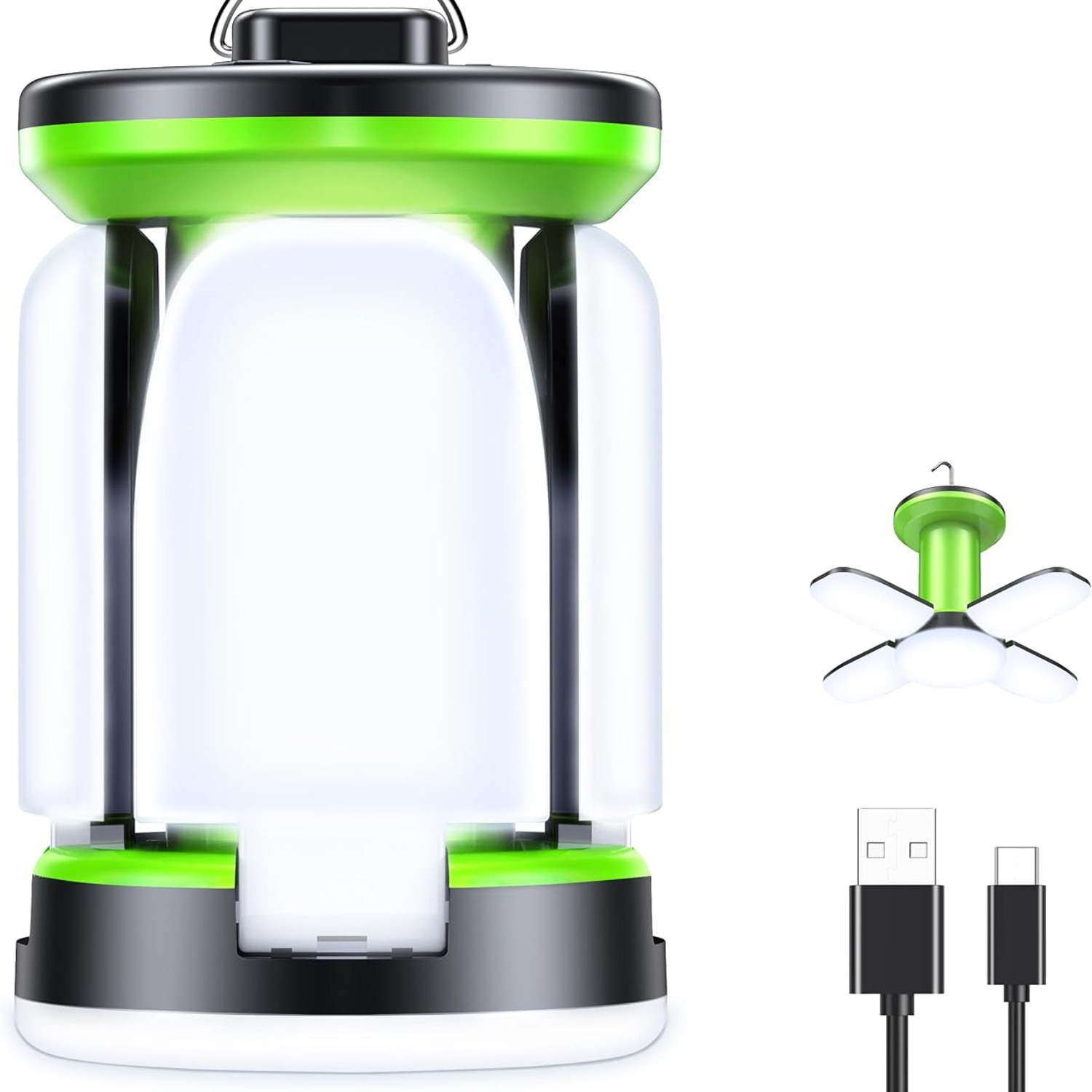
The Blukar K9107 rechargeable camping lantern offers folding side lights, seven modes and a choice of hanging or tabletop placement. It is intended for area lighting rather than a narrow beam aimed down a path.
The main limit is worth knowing straight away. This model is listed as not water resistant. Think of it as a light for dry, sheltered spaces, not a lamp to leave on an exposed picnic table overnight.
How the folding design works
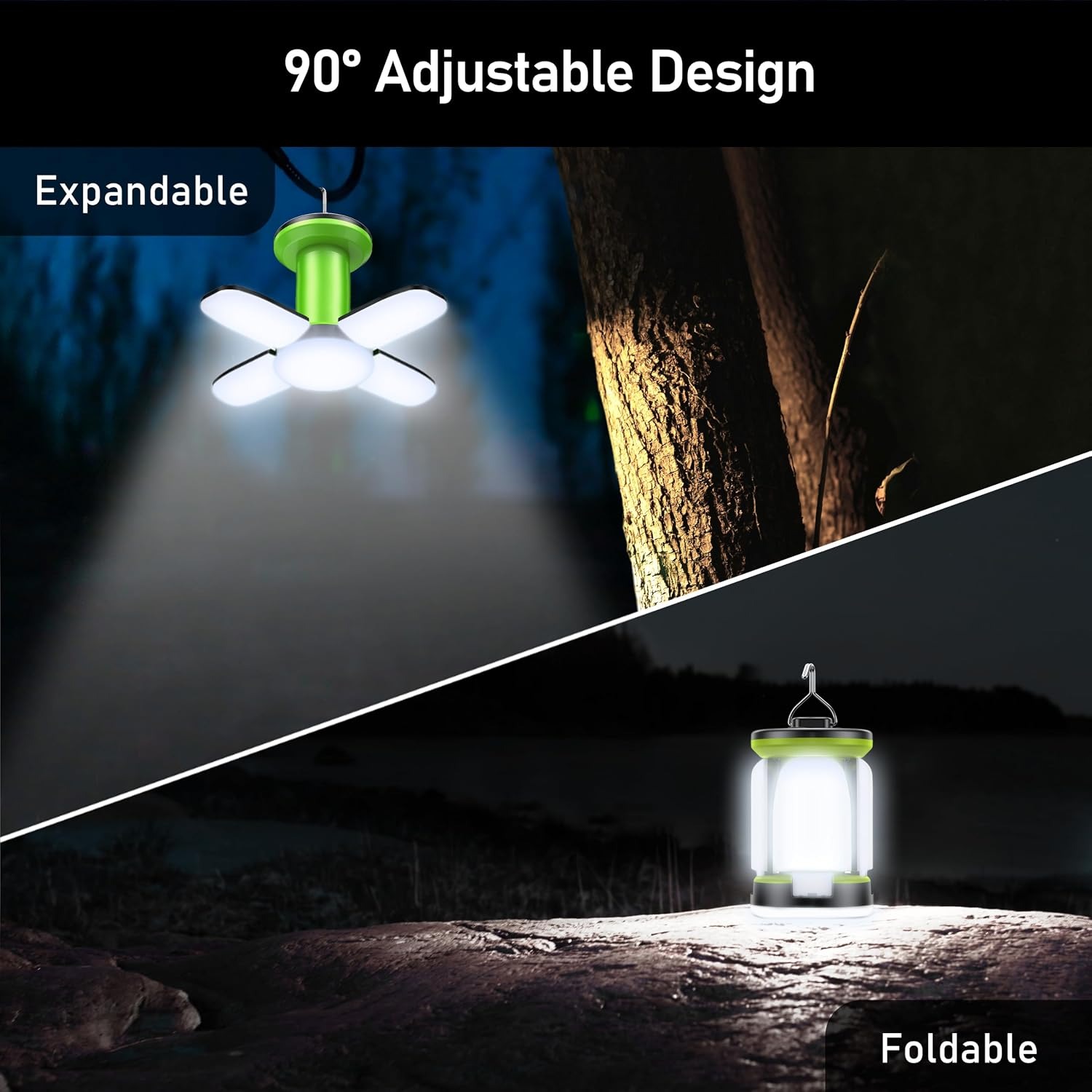
The lantern's side lights fold in and open out. This changes its layout, so you can arrange it for portable use or hang it with the panels opened. The product description describes a hook at the top for overhead placement.
That flexibility matters when space is tight. A lamp on the floor may be blocked by bags or bedding. Hanging it from a suitable support gives you another way to place the light without taking up table space.
Before choosing a hanging position, check the support itself. A tent loop needs to be suitable for the load, and the lamp should not press against fabric. Keep it somewhere you can reach without pulling on the tent.
For tabletop use, choose a dry, level surface. Place it away from the edge and from drinks. A convenient position is only useful if the lamp is unlikely to get knocked over.
Understand the seven modes
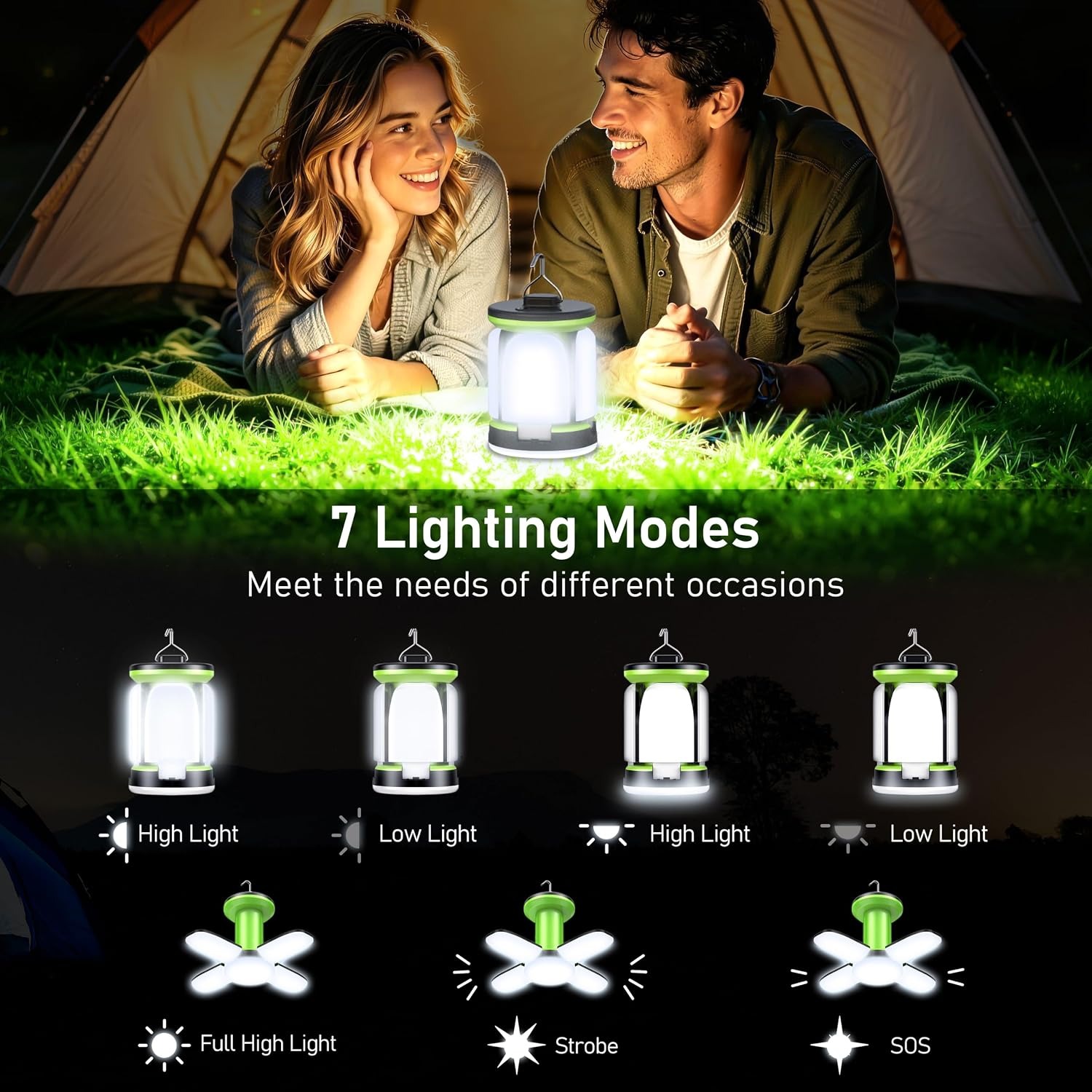
This seven mode camping light includes strong and weak side lighting, high and low bottom lighting, full strong light, strobe and SOS. These settings change which parts of the lamp are used and how the light behaves.
Start with the setting that suits the job. A quieter evening inside a tent may call for a different mode from sorting equipment. Try the steady settings at home before a trip so you know what to expect.
The listing describes one-click mode changes, but it does not provide the full control sequence. Check the supplied instructions rather than assuming how the switch works or whether it remembers a previous setting.
Strobe and SOS are separate from normal steady lighting. Learn how to reach them before you might need them, and avoid shining flashing light towards other campers. An SOS setting does not replace a phone, beacon or proper emergency plan.
Read the brightness figures carefully
Choose the lighting layout for the task. Hanging the lamp can spread light over a table, while standing it nearby can suit a smaller area. Adjust the panels and mode to see where light falls.
Test the lantern in the space where you intend to use it. A brighter mode uses more battery power, so a lower setting may be useful when you only need nearby light.
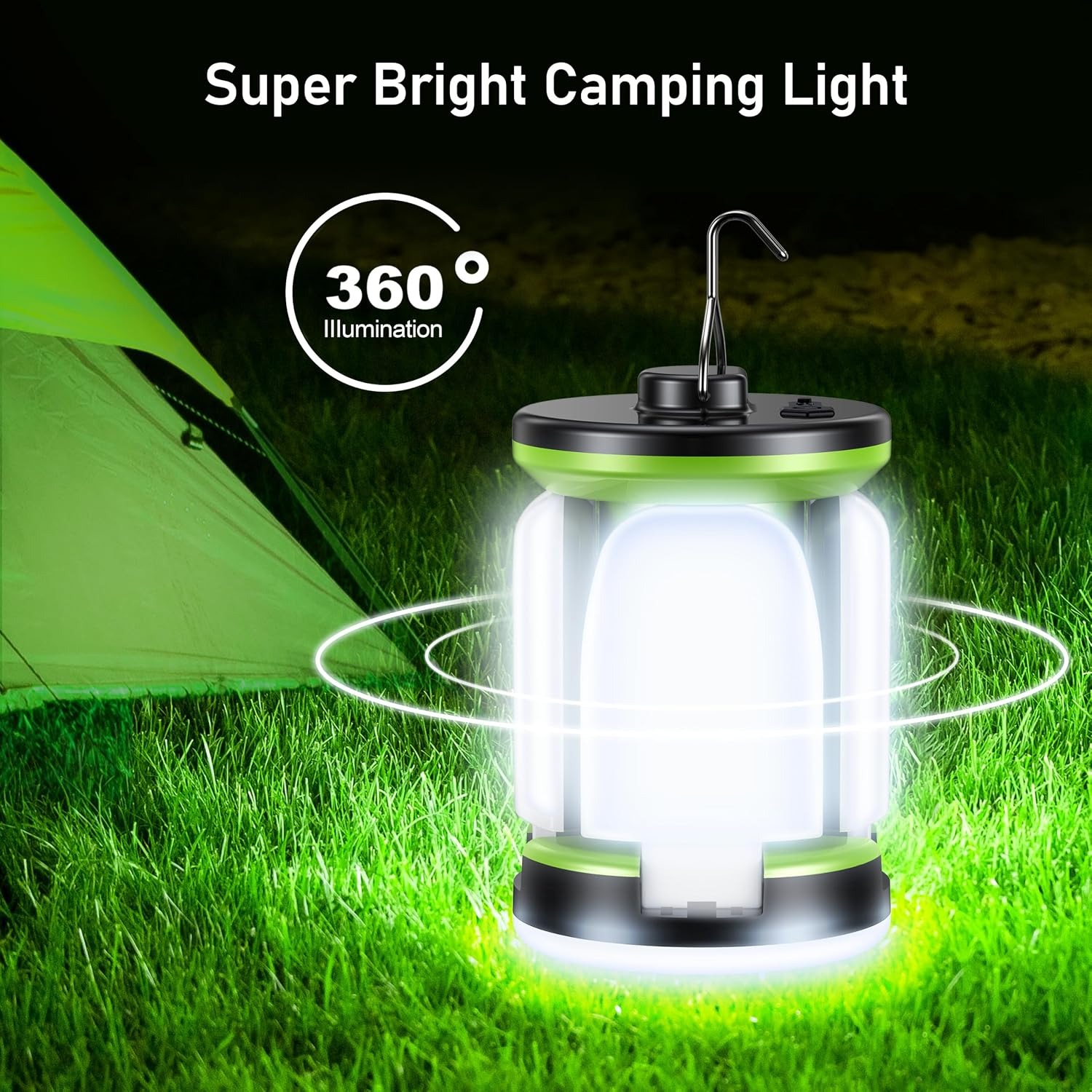
The lamp also has 60 LEDs and a stated 360-degree beam angle. Neither figure proves how well it will light your particular tent. LED count describes the light sources, while beam angle describes spread.
For a useful comparison, look at output, placement and the task together. Reading close by is different from lighting a large shared shelter. A lamp that suits one does not automatically suit the other.
Plan battery life around your use
Supplier copy describes a built-in 3600 mAh battery and a runtime range of 10+ hours, depending on mode. The product details also list 50 hours of battery life. Individual mode runtimes and test conditions are not supplied.
Treat the range as planning information, not a promise of 50 hours on every setting. If you expect several long evenings of use, arrange a way to recharge and consider a separate backup light.
The listed charging time is 4 to 5 hours. Charge the lamp before packing rather than leaving it until you are ready to leave. A quick check of the controls also helps catch a flat battery before it becomes a campsite problem.
The product description lists an included USB charging cable. The connector type and wall adapter requirements are not specified, so check the supplied instructions before connecting a power source. There is no confirmed power-bank function for charging a phone.
Decide whether the size suits your kit
The listed weight is 237 g. The supplied item dimensions are 8.1 × 8.1 × 12.9 cm, although separate measurements with the side lights opened are not provided.
For car camping, those figures help you plan a place in a kit box. For a walking trip, weigh the lantern's value against everything else you carry. Remember to account for any charging equipment you need as well.
A compact tent light still needs protection in transit. Pack it so other gear does not force the panels open or press heavily against them. Check that it is switched off before closing your bag.
If you intend to hang it in a small shelter, allow space for the opened lights. The folded dimensions alone will not tell you how much room the full arrangement needs.
Match it to the right setting
The Blukar K9107 lantern may suit campers who want one light they can move between a table and a tent. The different layouts offer options for resting, reading nearby or sorting equipment in a sheltered space.
It can also serve as an emergency room light at home. A charged battery-powered lamp does not need a live mains connection while in use. Store it where you can find it easily rather than at the bottom of packed camping gear.
For fishing or outdoor maintenance, the dry-use limit remains important. A covered position is different from an exposed bank, wet work area or open boat. Choose a weather-rated alternative when contact with water is likely.
For trail walking, think about beam direction and hands-free use. An area lantern is not the same tool as a focused torch or headlamp. Choose your main walking light around the route and conditions.
Make water resistance a deciding factor
“Camping light” does not mean waterproof. This model is specifically listed as not water resistant, so rain protection should be part of your plan from the start.
Keep it away from splashes, damp ground and places where water can collect. Inside a tent, avoid positions against wet fabric or beneath a likely drip. Shelter helps, but it does not remove the need to check the surroundings.
The same care applies during charging. Use a dry location and keep the cable and connection away from moisture. Do not handle charging as an afterthought once conditions have turned wet.
If your trips often involve exposed camps or wet gear, this limit may decide the purchase for you. A suitable weather-resistant light is a better choice than trying to make a dry-use lamp fit the wrong job.
Care for it between trips
Simple care starts with switching the lamp off and wiping it with a soft, dry cloth. Do not rinse it, immerse it or spray cleaner into its openings. Follow any further cleaning guidance supplied with the product.
Check the housing, folding parts and charging cable before use. If you notice damage, stop and seek guidance rather than trying to carry on with a compromised lamp.
Store it somewhere dry and away from excessive heat. Follow the supplied battery instructions for longer storage periods. The product details do not confirm a user-replaceable battery, so do not assume the case should be opened.
Before each outing, check its charge and test the modes. This small habit is especially useful when the lamp has been sitting in an emergency kit for some time.
Start with your main task. Do you need light around a table, inside a tent or during a power cut? Then check whether hanging, tabletop placement and the listed output meet that need.
Next, consider charging access and weather exposure. The runtime range may be useful for planning, but it does not remove the need for a backup on longer trips. Lack of water resistance is a firm limit.
The short version
The Blukar K9107 combines folding side lights, seven modes and hanging or tabletop placement in a listed 237 g lantern. USB charging makes it an option for sheltered camping and home backup lighting.
Choose it for those features, not an assumed 2,000-lumen output or weatherproof build. Keep it dry, plan your charging and confirm any missing details that matter to your use.