
The complete guide
Choosing and Keeping an AeroKit 3 Series First Aid Softpack
First aid supplies are easier to keep track of when they have a known place. Loose packets in several drawers can make it hard to see what you have, what has been used and what needs replacing. A dedicated bag gives you one place to start.
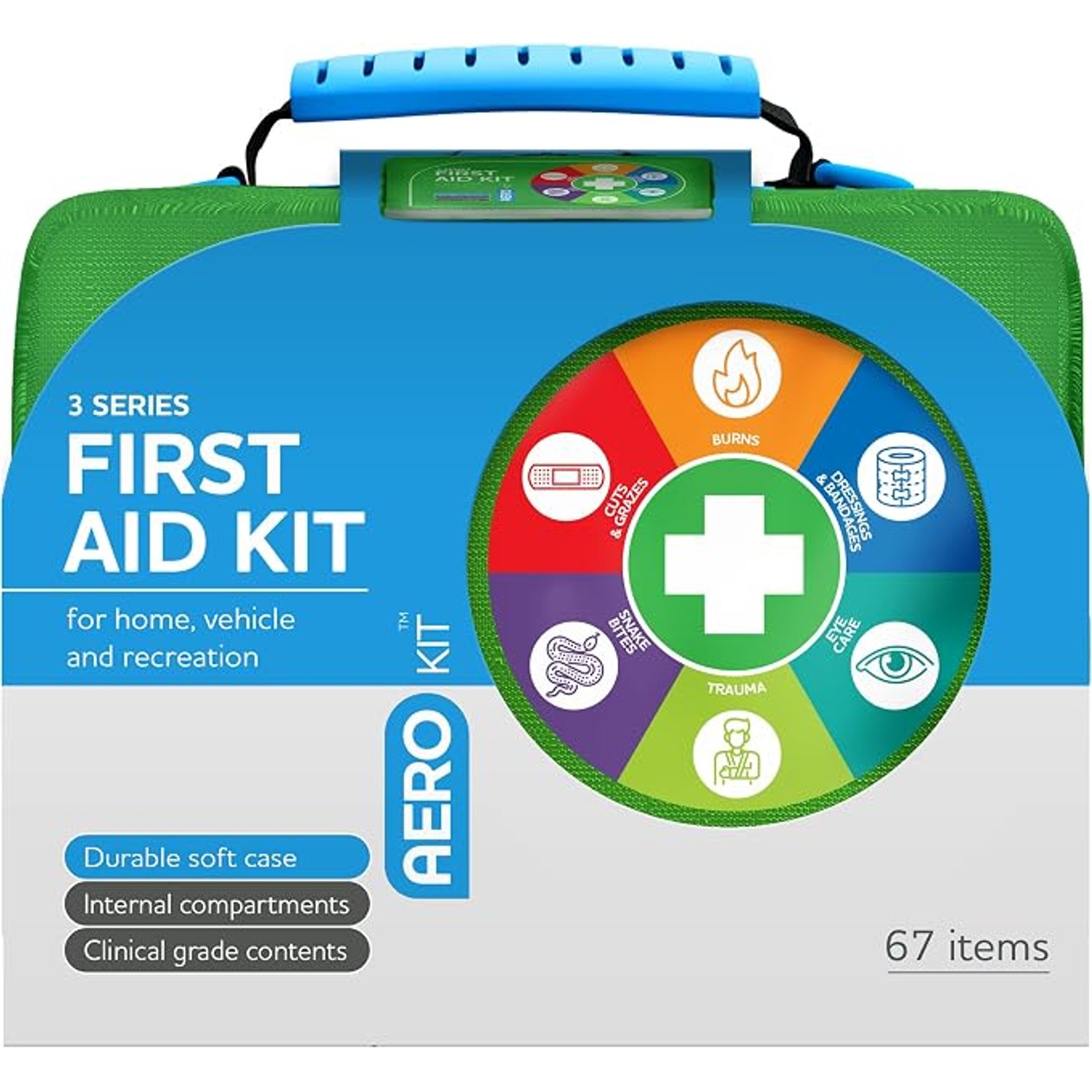
The AeroKit 3 Series First Aid Softpack Green brings supplies together in a green soft case with easy-pull zips and a reflective strip. Its partial contents overview includes dressings and bandages. That is useful starting information, but it is not a full inventory.
Choosing a first aid kit means looking beyond the bag. The right choice depends on the supplies inside, the people who may need them and where you plan to keep it. Here is how to assess this softpack without assuming features or contents that have not been confirmed.
Start with what is known
This AeroKit first aid kit belongs to the 3 Series. The case measures 20 x 11.5 x 16 cm and has easy-pull zips. A reflective strip is also part of the green case.
Those details help you compare its physical format with your available space. They do not tell you how many supplies it contains or which situations it can cover. The series name should not be read as an item count or a level of medical capability.
The manufacturer lists 67 items for the green AKR3GS softpack, including dressings, bandages, gloves, scissors and a thermal blanket. Before buying for a specific purpose, confirm the full inventory and compare it with your needs.
Understand the role of the softpack
A softpack is a way to keep supplies together. With this product, access is through easy-pull zips rather than a stated hard-case closure. The material itself is not specified.
Think about how you will reach the bag, remove it from storage and open it. A pack that fits on a shelf may still be awkward to use if other items are stacked around it. Allow space to grasp it and move it to a suitable surface.
The reflective strip is a confirmed case detail, but it should not be confused with a light. There is no claim that it glows in the dark. Keep the bag in a known location rather than relying on that strip to help someone find it.
Measure your storage space first
The stated measurements are 20 x 11.5 x 16 cm. Use them as a starting point when checking a cupboard, shelf or space within another bag.
Do not plan around an exact, tight fit. You will need enough room to remove the softpack without pulling hard on the case or zips. Also consider whether its storage spot will remain accessible when nearby cupboards or bags are full.
Weight is not specified. If you are choosing a portable first aid bag for a trip with strict luggage limits, that missing detail matters. Confirm it rather than estimating from the dimensions.
There is also no stated spare capacity. If you expect to add supplies, check the available space first. Avoid choosing it on the assumption that it will hold a large number of extras.
Check the inventory against your household
A home first aid bag should be assessed around the people who may rely on it. Household size, activities and individual sensitivities can all affect what you need to check.
The manufacturer confirms 67 items for model AKR3GS, including dressings, bandages, nitrile gloves and scissors. The overview below groups the supplies by type. Check individual labels and the supplied inventory; medicines are not identified in this overview.
Write down what you need to verify, then compare that with a full contents list. This is more useful than comparing product names alone. Two bags of a similar size may have quite different inventories.
Family first aid planning also includes knowledge. Keeping a kit nearby does not replace recognised first aid training or qualified medical advice. This page does not provide treatment steps.
Consider travel needs separately
A travel first aid bag deserves a fresh check for each trip. Do not assume that a kit considered for home use will cover every travel need without review.
Start with the case measurements and the full contents. Then consider your destination, planned activities and access to medical help. If a particular item is important to your plans, confirm that it is present rather than treating it as a standard inclusion.
Transport rules may apply to individual items. Check the actual inventory against the rules for your journey before packing. The kit name alone cannot establish whether every item is permitted.
This product is not a complete food-and-water survival kit. Keep wider emergency planning separate, including any food, water and other supplies your plans call for.
Know which claims are not made
Missing information matters when it affects your decision. The case material, weight and country of origin are not specified here. There is also no waterproof claim.
If water exposure is likely, do not assume that a soft case or zip closure will keep the contents dry. Choose storage arrangements based on confirmed protection, not appearance.
No allergy-safe guarantee is provided. Anyone with a known sensitivity should check individual labels and get qualified advice where needed. A general description of dressings and bandages cannot establish the materials used in every item.
There is no workplace-compliance claim either. If you are buying for a workplace, compare the full inventory with applicable requirements. Do not treat the 3 Series name as evidence of compliance.
Make its location part of the plan
Once you have assessed the contents, choose a dry storage location. Follow any storage directions on individual supplies, since the needs of the contents matter as much as the case.
A good location is one that suitable adults know and can reach. Avoid letting the bag disappear behind rarely used household items. Tell the people who may need it where it is kept.
Access also needs thought where children are present. Independent use by children is not established in this record. A responsible adult should decide on appropriate storage and supervision after checking the supplies.
If you move the pack for a trip or activity, make returning it part of unpacking. A known storage spot is only useful if the bag is actually there when someone looks for it.
Check before you need it
Regular checks help you understand the condition of your household first aid supplies. Open the pack, review what is present and look at individual packaging.
Check any expiry dates and replace used, expired or unsuitable items. If you remove something, make a note so the gap is not forgotten. Do not assume that a closed bag still contains everything it held before.
It is also worth becoming familiar with the layout. This record does not describe internal compartments, so assess the actual arrangement when you have the pack.
Keep product labels and relevant instructions available. When a supply needs replacing, its details are more useful than a rough memory of its appearance.
Care for the case and contents
Follow any care label on the case before cleaning it. The material is unspecified, so there is no basis here for recommending machine washing, soaking or a particular cleaning product.
Keep the zips clear of loose wrappers and other items. If a zip catches, check for an obstruction rather than forcing it. Avoid packing the case so tightly that the closure is under strain.
Store the pack dry and inspect the contents if it becomes wet or dirty. The appearance of the outer bag alone cannot tell you whether every item inside remains suitable.
Care is not only about cleaning. Keeping track of used supplies and checking packaging are important parts of maintaining a first aid kit.
Buying for someone else
A green first aid bag may be a practical gift for someone reviewing their preparedness. Still, the recipient needs to know what is inside and what has not been confirmed.
Share the contents information and encourage them to check the pack against their own needs. Avoid presenting it as complete protection for every household or trip.
If the product turns out not to suit, refer to the store returns policy. Voluntary 14-day change-of-mind returns are subject to conditions. Australian Consumer Law rights are unaffected.
The short version
The AeroKit 3 Series First Aid Softpack Green has a 20 x 11.5 x 16 cm case, easy-pull zips and a reflective strip. The manufacturer lists 67 items for model AKR3GS. The contents overview below summarises the supplied items.
Choose it by checking those contents, measuring your storage space and understanding its limits. Then give it a known location and review the supplies regularly. The bag is one part of first aid planning, alongside suitable knowledge and knowing when to seek help.
Contents overview
The green AKR3GS contains 67 items. Its supplies include dressings, bandages, adhesive strips, gauze, cleansing wipes, saline ampoules, burn-care supplies, nitrile gloves, a face shield, scissors, forceps, tape, safety pins, a thermal blanket, a first-aid leaflet and a notebook with pen. Follow the supplied contents list and instructions, and replenish items after use. This kit is not a substitute for medical attention.